West Virginia Dive Bar Shirts – Vintage Coal Country & Appalachian Saloon Graphics
Collection of shirts featuring West Virginia’s mountain taverns, historic coal camp watering holes, and industrial valley dive bars. Graphic designs center on Appalachian labor history, historic moonshine routes, and regional typography.

West Virginia Dive Bars
West Virginia Dive Bars
West Virginia Dive Bars
The Material History of Appalachian Ridge Taverns and Coal Towns
West Virginia’s drinking culture is historically intertwined with its extractive industries—specifically coal mining, timbering, and chemical manufacturing. In the isolated hollows and rugged terrain of the Appalachian Ridge, dive bars functioned as vital, unpretentious meeting spaces for union miners and industrial workers. These establishments were frequently built from local timber or housed in weathered brick buildings lining narrow river valleys. The interiors are physically defined by low acoustic-tile ceilings, dark wood-paneled walls, faded pool table felt, and historical coal company scrip tokens or regional athletic memorabilia.
The visual landscape of West Virginia bar apparel draws directly from this blue-collar heritage and unique geography. The graphics incorporate the heavy, no-nonsense typography of mid-century industrial signage, imagery of Appalachian wildlife, and visual nods to the state's history of illicit moonshine production in the backcountry. These designs avoid commercial polish, opting instead for distressed textures that replicate the look of workwear exposed to the elements of the Monongahela and Kanawha valleys.
Historic Watering Holes of the Mountain State
The following real-world venues represent the foundational history of West Virginia's nightlife and serve as the direct reference points for regional graphic apparel:
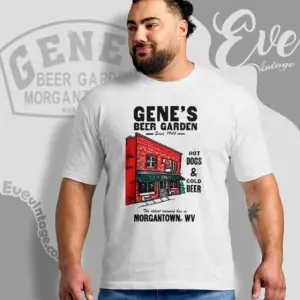
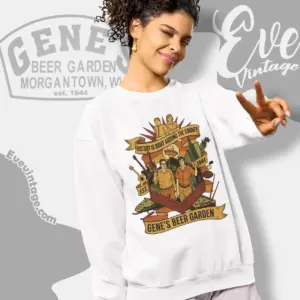
- Morgantown (Gene's Beer Garden): Established in 1944, Gene's holds the title of the oldest continuously operating bar in Morgantown. Situated in the historic Greenmont neighborhood, it features an unaltered mid-century interior, serving draft beer in heavy glassware alongside traditional regional staples like pepperoni rolls.
- Morgantown (Mario's Fishbowl): Operating since 1963 in a building that originally housed a 1940s mom-and-pop grocery store, this venue is famous for its tradition of serving cold beer in massive, frosted fishbowl glasses. The walls and ceilings are completely covered in decades of handwritten notes left on scrap paper by generations of locals.
- Charleston (The Empty Glass): Located near the state capitol complex, this windowless, grit-infused dive bar has been a cornerstone of the regional independent music circuit since the 1980s. Known for its sticker-plastered stage and dark interior, it routinely hosts blues, bluegrass, and underground rock acts.
- Charleston (The Red Carpet Lounge): A classic, narrow neighborhood dive operating within walking distance of the government district. It is recognized for its democratic mix of patrons, serving state politicians, lobbyists, and blue-collar tradesmen at the same laminate counter under vintage neon beer lights.
West Virginia Drinking Culture & Design Context
Why are handwritten notes and "Fishbowl" imagery prominent in West Virginia bar shirts?
This graphic motif refers directly to the interior tradition of Mario's Fishbowl in Morgantown. For over sixty years, patrons have pinned thoughts, dates, and names onto the wood paneling. Including scrap-paper textures and heavy fishbowl glassware in shirt designs communicates an authentic insider knowledge of West Virginia's specific tavern traditions rather than generic bar tropes.
What role does moonshine history play in the graphic identity of this collection?
Before and during Prohibition, the dense forests and steep ridges of West Virginia made it a major hub for illicit copper-still distillation. Shirt designs frequently reference historical moonshine culture, utilizing imagery of mason jars, mountain ridge outlines, and vintage tax-stamp typography to represent the region's historic resistance to federal liquor enforcement and spirit of self-reliance.
How do West Virginia bar shirt graphics visually represent the state's industrial history?
Graphics representing West Virginia utilize stark, industrial block fonts (such as Gothic and heavy slab serifs) paired with old coal-mining motifs like crossed pickaxes, carbide lamps, or canary indicators. The color palettes rely heavily on muted earth tones—charcoal gray, dark forest green, and rust brown—reflecting the natural geology and industrial landscape of the Appalachian mountains.