Alaska Dive Bar Shirts
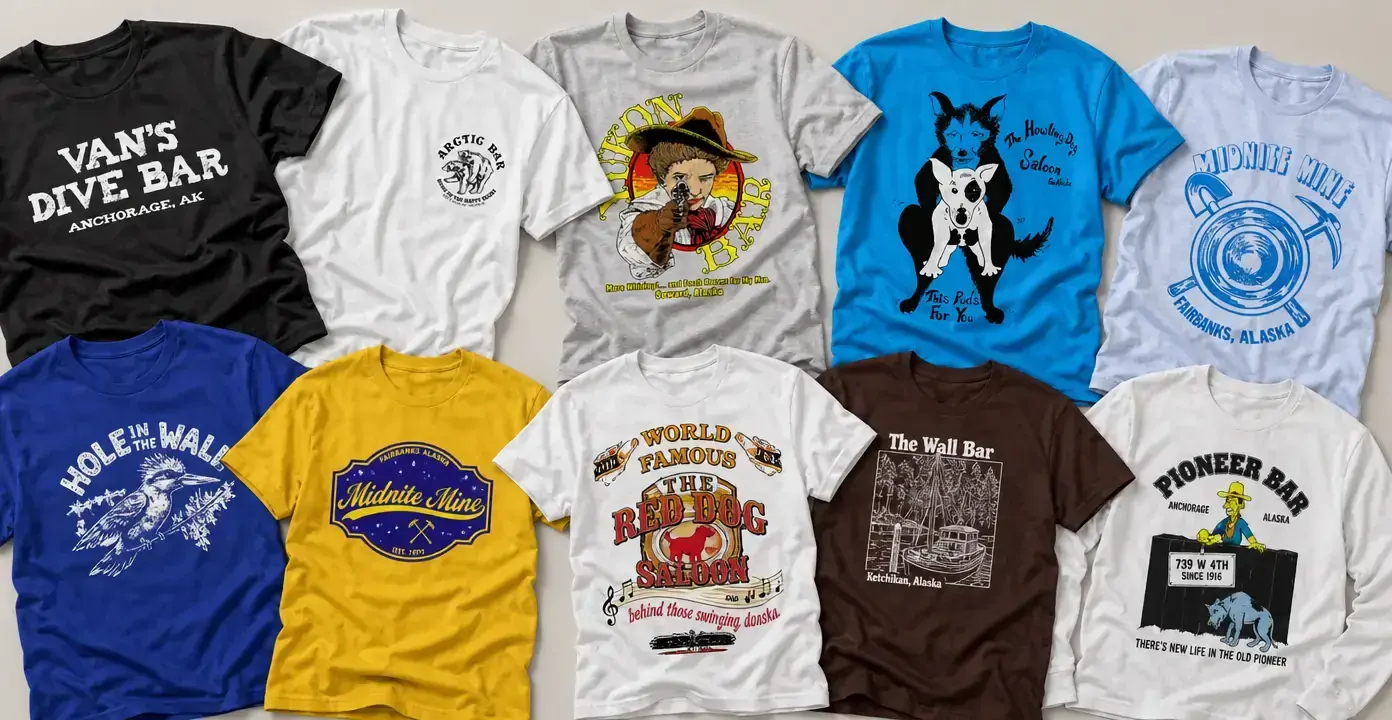
Alaska dive bar shirts turn local watering-hole names into graphics shaped by saloon signs, weathered lettering, mining emblems, maritime scenery, and irreverent mascots. The collection reaches from recognizable Homer, Juneau, and Ketchikan establishments to Fairbanks and Anchorage bar references, with designs ranging from restrained chest marks to large souvenir-style illustrations rooted in each venue’s name and setting.
Alaska Dive Bars
Alaska Dive Bars

Alaska Dive Bars

Alaska Dive Bars
Alaska Dive Bars
Alaska Dive Bars
Alaska Dive Bars
Alaska Dive Bars

Alaska Dive Bars

Alaska Dive Bars

Alaska Dive Bars
Funny Howling Dog Saloon Fox Alaska Shirt I Party Doggystyle

Alaska Dive Bars
Alaska Dive Bars

Alaska Dive Bars
Alaska Dive Bars
Alaska Dive Bars
Alaska Bar Graphics with a Local Identity
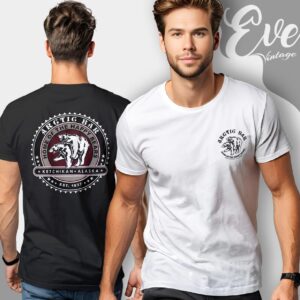
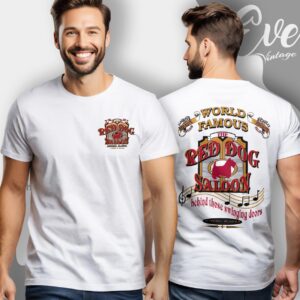
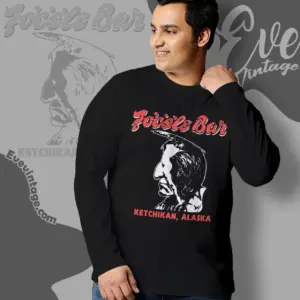
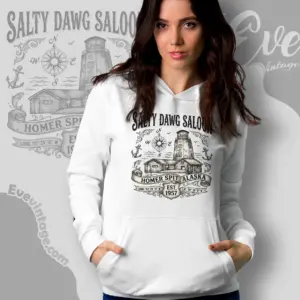
An Alaska dive bar shirt usually begins with a specific place rather than a generic drinking slogan. The venue name, community, and surrounding visual language work together like a portable bar sign. Homer’s Salty Dawg Saloon, Juneau’s Red Dog Saloon, and Ketchikan’s Arctic Bar are especially recognizable reference points: the Salty Dawg occupies historic cabin buildings on the Homer Spit, the Red Dog has roots in Juneau’s mining-era saloon culture, and the Arctic Bar has operated in Ketchikan since 1937.
Other designs shift the geographic emphasis toward Fairbanks, Anchorage, Seward, Fox, and coastal communities. City names matter because they distinguish a neighborhood-bar graphic from broad Alaska souvenir apparel. They also shape the artwork: an interior-Alaska subject can support mining tools or frontier lettering, while a coastal or marina reference naturally suits boats, mountains, water, and rugged shoreline compositions.
From Bar-Sign Lettering to Illustrated Souvenir Art
The clearest design divide is between typography-led shirts and illustrated graphics. A simple venue-name print may use distressed block letters, a compact chest mark, or an arched wordmark that resembles an old tavern sign. These treatments keep the focus on the establishment and location, often in one or two ink colors.
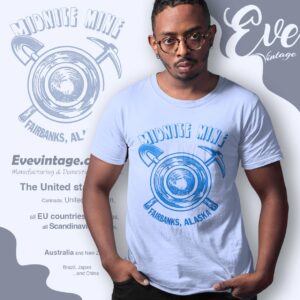
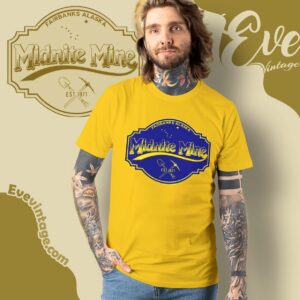
Badge and emblem designs add another layer. Crossed picks, stars, framed plaques, circular seals, and curved location text create the look of a workwear patch or vintage advertising mark. The sampled Midnite Mine artwork shows how one subject can support both a mining emblem and a more polished sign-style composition; the spelling may also appear as “Midnight Mine” in outside references, so the printed venue treatment is an important distinction.
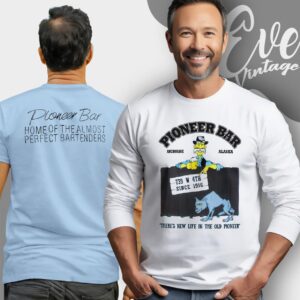
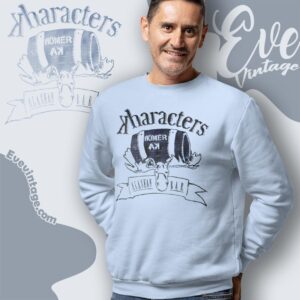
Large illustrations produce a different kind of Alaska bar shirt. Frontier characters, mountain landscapes, animals, saloon doors, and maritime scenes make the image read more like remembered roadside merchandise. Bright colors and humorous mascots push that approach toward novelty, while limited palettes and worn textures give similar subjects a quieter vintage character.
Choosing a Design Direction
- Venue-first graphics emphasize a specific bar name and Alaska community.
- Historic-saloon styles use ornamental type, sign shapes, and frontier imagery without requiring an elaborate scene.
- Occupational motifs draw on mining or maritime symbols to reinforce the setting.
- Novelty designs favor cartoon animals, comic slogans, and more conspicuous color.
These distinctions make the category less about a single “Alaska look” and more about how individual watering holes express place through names, symbols, and bar-sign aesthetics.