Texas Dive Bar Shirts
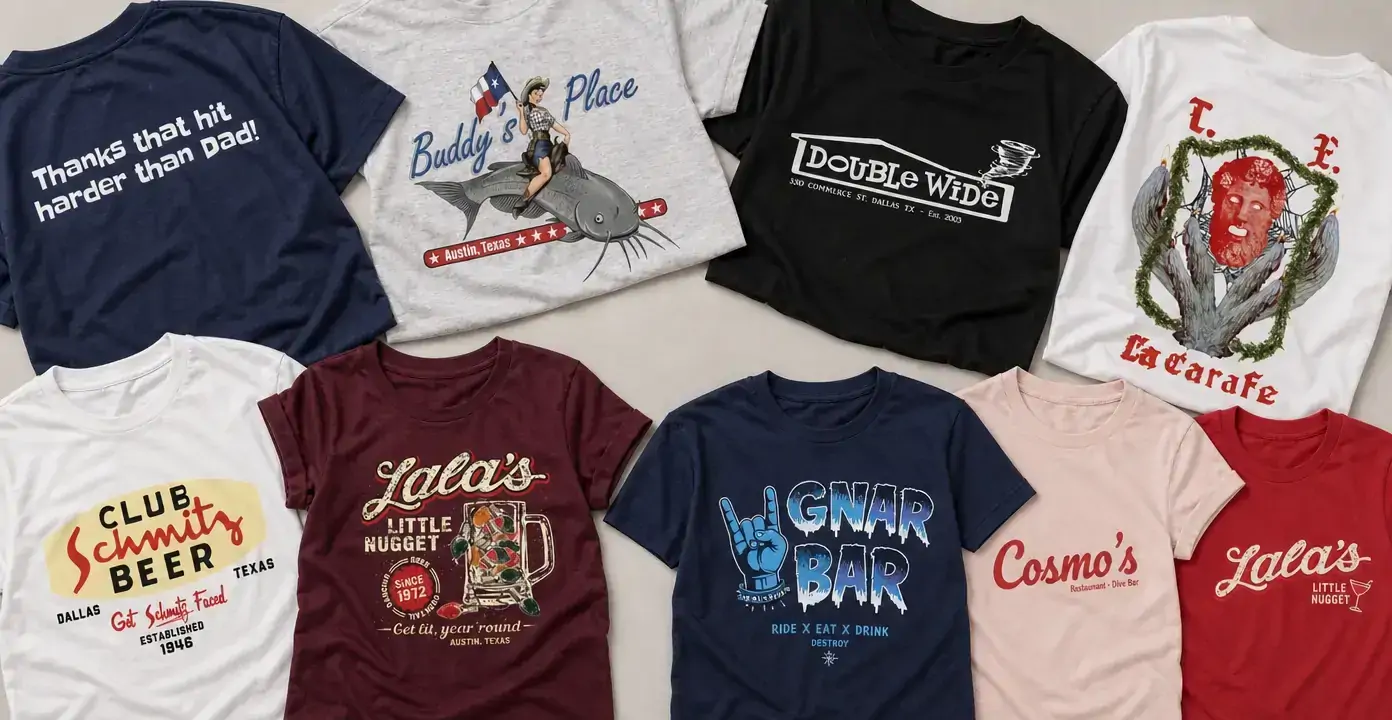
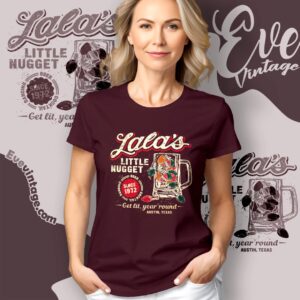
Texas dive bar shirts turn neighborhood venue names, saloon lettering, and local bar symbols into wearable graphics. The collection is especially grounded in Austin and Dallas, with designs ranging from restrained chest logos and vintage sign-style wordmarks to illustrated Western characters, novelty mascots, and bold contemporary lettering associated with bars across the state.
Texas Dive Bars
Texas Dive Bars

Texas Dive Bars

Texas Dive Bars
Texas Dive Bars

Texas Dive Bars

Texas Dive Bars
Texas Dive Bars

Texas Dive Bars
Texas Dive Bars

Texas Dive Bars

Texas Dive Bars

Texas Dive Bars
Texas Dive Bars
Texas Dive Bars
Texas Dive Bars
Texas Dive Bars
Texas Dive Bars
Texas Dive Bars
Texas Dive Bars

Texas Dive Bars
Texas Dive Bars
Texas Dive Bars

Texas Dive Bars

Texas Dive Bars

Texas Dive Bars
Texas Dive Bars

Texas Dive Bars

Texas Dive Bars

Texas Dive Bars
Texas Bar Identity in Graphic Form
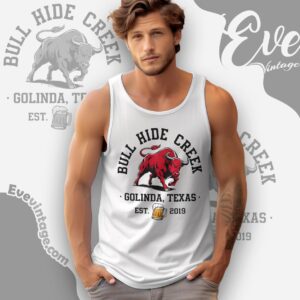
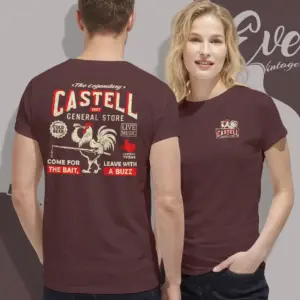
A Texas dive bar shirt is often less about a general nightlife theme than a particular place. Venue names, city references, slogans, and familiar emblems give these graphics the character of an old staff tee, matchbook, window sign, or beer advertisement. Some designs use little more than a script wordmark and location line. Others build a complete scene with Western figures, Texas-colored accents, drink imagery, animals, or deliberately rough lettering.
This venue-first approach also explains the range within the category. A dive bar, neighborhood tavern, honky-tonk, saloon, and beer bar may share an unpolished local spirit while presenting very different visual identities. Honky-tonk and saloon graphics tend to lean toward country lettering and Western imagery. Urban bar designs can be more typographic, irreverent, or contemporary, while coastal and Hill Country references add their own sense of place without abandoning the neighborhood-bar format.
Austin, Dallas, and Bars Beyond the Big Cities
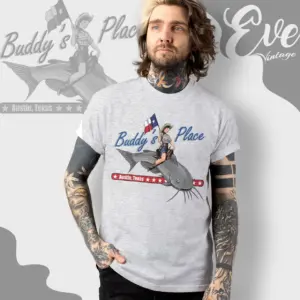
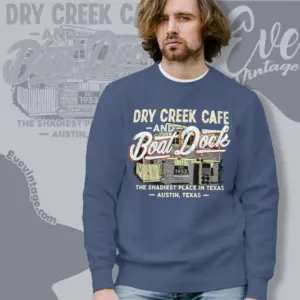
Austin and Dallas form two of the clearest geographic threads. Austin designs include straightforward venue marks as well as playful illustrations and music-adjacent bar imagery. Buddy’s Place supports the city’s dive-bar and live-music connection, while Dry Creek Café & Boat Dock belongs to Austin’s remembered bar landscape; it closed in 2021, so related artwork carries a different meaning from a shirt tied to a current night out.
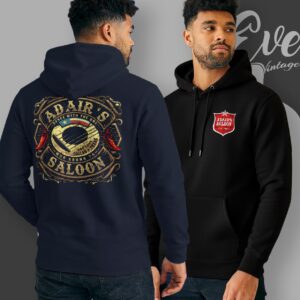
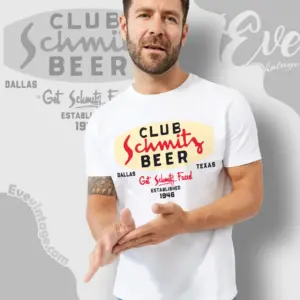
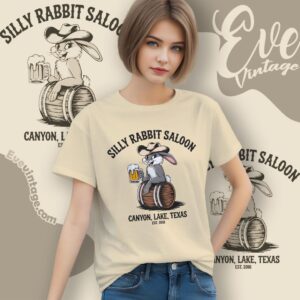
Dallas graphics range from the compact vintage-style branding associated with Club Schmitz to Deep Ellum references such as Adair’s Saloon, where dive-bar and honky-tonk identities overlap. The wider collection reaches beyond those two cities through venue names associated with Houston, Galveston, Port Aransas, Lubbock, Brenham, Canyon Lake, and other Texas communities. That geographic detail is often central to the design rather than a minor caption.
Choosing a Graphic Direction
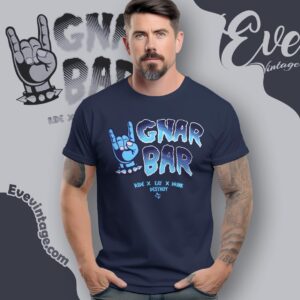
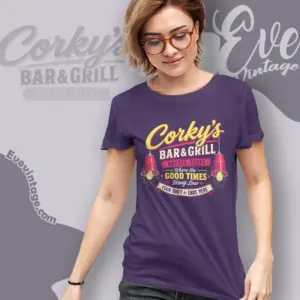
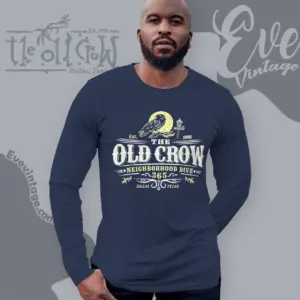
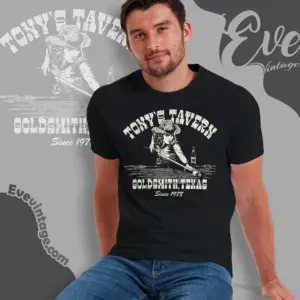
For a low-key bar-shirt look, focus on a small chest emblem, clean script, or simple one-color venue name. Larger compositions create more of a souvenir or vintage-advertising effect, especially when they combine a mascot, slogan, location, and distressed texture. Western illustrations and saloon typography emphasize the honky-tonk side of Texas bar culture; bold outlined letters, novelty symbols, and hand-sign graphics feel more modern and irreverent.
Because bars can close, relocate, or change identity, a venue shirt may function as local recognition, personal nostalgia, or a record of a remembered room. The strongest distinction is therefore not simply old versus new, but understated venue branding versus expressive artwork built around the bar’s individual personality.