Kentucky Dive Bar Shirts – Vintage Bourbon Trail & Bluegrass Saloon Apparel
Collection of shirts dedicated to Kentucky’s historic post-Prohibition taverns, remote limestone-hollow watering holes, and legendary race-track refuges. Graphic designs focus on unpolished bourbon history, tobacco-country grit, and classic territorial typography.
Kentucky Dive Bars
Kentucky Dive Bars
The Infrastructure of Limestone Springs, Bourbon Outlaws, and Industrial River Docks
Kentucky’s drinking architecture is heavily shaped by its unique mineral geography and deep-rooted agrarian economy. The state’s famous limestone-filtered water didn’t just fuel the multi-billion-dollar bourbon industry; it also dictated the placement of early frontier saloons and remote hollow outposts. While the high-end distilleries of the modern Bourbon Trail celebrate polished corporate tourism, true Kentucky dive bars are the unfiltered preservation sites of working-class survival. In urban hubs along the Ohio River like Louisville and Newport, dense brick corner taverns emerged to serve iron foundry workers, tobacco rollers, and shipyard crews coming off exhausting shifts.
In rural pockets across the Bluegrass and the eastern coalfields, watering holes developed as vital communal sanctuaries where local storytelling, old-school jukebox selections, and independent musical circuits took precedence over commercial enterprise. The visual identity of Bluegrass State bar apparel completely rejects clean digital vector art. Instead, the graphics utilize bold, weathered woodtype stencils from 19th-century broadsides, references to classic cash-only house rules, and iconic local short-order traditions that keep the state's raw identity alive.
Historical Establishments in the Bluegrass State
The following real-world venues represent the verified history of Kentucky's nightlife and serve as direct reference material for regional graphic apparel:
- Louisville (Spring Street Bar & Grill): Located at 300 S Spring Street in the historic Irish Hill neighborhood, this legendary venue is legally recognized as Louisville’s oldest continuously operating bar. Established originally in the late 1920s as a confectionery during the heights of Prohibition, it functioned as a vital, covert neighborhood watering hole for local railroad and industrial workers. The interior completely preserves its mid-century blue-collar infrastructure, featuring an intact terrazzo floor, a weathered laminate service counter, and walls packed with vintage local sports memorabilia, completely resisting the modern upscale development of the surrounding blocks.
- Louisville (Nachbar): Tucked away at 1127 Logan Street in the heart of Germantown, this shot-and-a-beer landmark is a definitive architectural archetype of the traditional Midwestern neighborhood corner tap. Positioned directly inside a residential residential grid, its physical identity is defined by a low-light, wood-paneled interior, a massive vintage taxidermy stag head peering over the back bar, and a sprawling, unpolished gravel backyard patio. It functions as a crucial sanctuary for local artists, musicians, and neighborhood characters, maintaining a strict, no-nonsense attitude toward hospitality.
- Midway (The Grey Goose): Housed in a historic, weathered brick structure along the railroad lines of Woody Alley, this venue anchors the drinking folklore of rural Central Kentucky. Positioned deep within horse-farming country, its material layout reflects the raw, unpolished history of early railroad transit and agricultural labor. Featuring exposed stone walls, heavy timber support beams, and a total absence of corporate commercial decor, it remains an authentic crossroads where local farmhands and travelers swap stories over cheap domestic cans and pours of local rye.
Kentucky Drinking Culture & Design Context
Why do taxidermy antlers and wood-paneled motifs dominate Kentucky bar apparel?
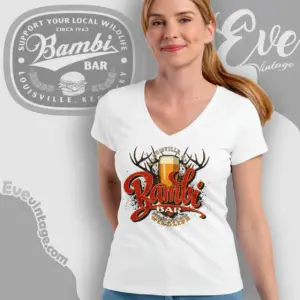
This visual framework draws directly from the exact physical interior of institutional Germantown taverns like Nachbar. The use of hand-drawn stag profiles and rich, tobacco-faded wood-grain textures pays direct homage to the post-war "basement-extension" style common to working-class Louisville neighborhoods. Replicating these specific interior details on apparel signals an authentic familiarity with real local counter-culture, completely distinct from mainstream bourbon tourist branding.
What is the cultural history behind the "Confectionery Open" stencil on regional graphics?
The confectionery motif references the real-world regulatory survival strategies practiced by historic Kentucky watering holes like the Spring Street Bar during Prohibition. By operating under the legal guise of a candy and soda shop while covertly pouring spirits in the back, these venues preserved the community's social infrastructure through decades of dry-law mandates. Including this text element on shirt designs honors the raw, localized resilience of the state's early neighborhood enclaves.
How do Ohio River industrial dive graphics and rural Bluegrass designs differ visually?
Ohio River dive graphics (Louisville, Newport, Covington) focus on urban transit and industrial grit, incorporating bold sans-serif typography modeled after old rail yard stencils, textures of weathered brick and rusted factory steel, and colors like asphalt black and faded neon red. Conversely, rural Bluegrass and horse-country designs lean entirely into agrarian extraction and frontier heritage: featuring weathered wood-block lettering from 19th-century saloon manifests, imagery of horseshoe outlines or tobacco leaves, and a desaturated palette of deep forest green, limestone gray, and bourbon amber.